Digital shelf monitoring is the practice of tracking and analyzing how products appear, perform, and compete across online retail channels—covering stock availability, content accuracy, pricing, search visibility, and customer reviews.
What is Digital Shelf Monitoring?
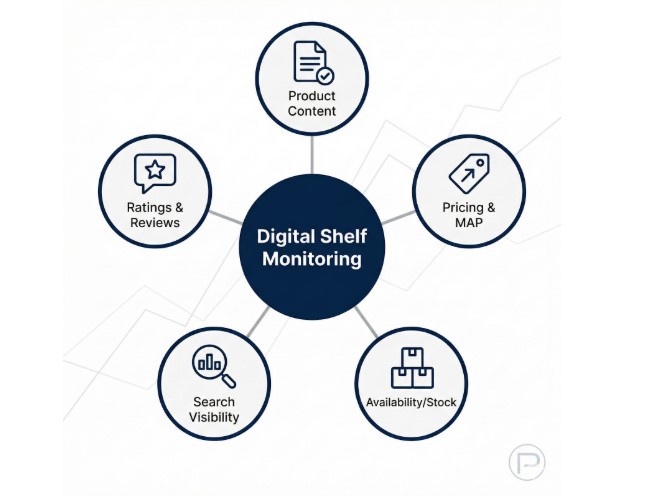
Digital shelf monitoring is the continuous process of tracking product visibility, content accuracy, pricing, availability, and reviews across eCommerce platforms. It replaces manual checks with automated digital shelf tracking to give brands real-time visibility into how their products appear to online shoppers. The core components include:
-
- Product content: Images, titles, descriptions, and attributes
- Pricing: Current prices vs. competitor pricing and MAP compliance
- Availability: Stock status across retailers and geographies
- Search visibility: Where products rank for key search terms
- Ratings and reviews: Customer feedback and sentiment
What is the Digital Shelf?
The “digital shelf” is the online equivalent of a physical retail shelf—it’s anywhere a product can be discovered, researched, or purchased online. Examples include:
– Marketplace product pages (Amazon, Walmart, Flipkart)
– Retailer websites and mobile apps
– Search engine results and shopping ads
– Social commerce platforms
Unlike physical shelves, the digital shelf is dynamic, changing by the minute based on algorithms, competitor actions, and consumer behavior.
Why Digital Shelf Monitoring Matters for Brands?
Passive or manual monitoring is no longer sufficient for modern brands; the business case for digital shelf analytics is built on avoiding critical pain points that directly impact the bottom line:
- Lost sales from stockouts: If you’re out of stock, competitors capture your demand.
- Content errors erode trust: Incorrect product info leads to returns and negative reviews.
- Price misalignment damages margins: Unauthorized discounts or pricing gaps impact profitability.
- Poor search visibility means invisibility: Products not on page one rarely get clicked.
Ultimately, digital shelf performance directly impacts revenue, brand perception, and retailer relationships.
Digital Shelf Metrics Every Brand Should Track
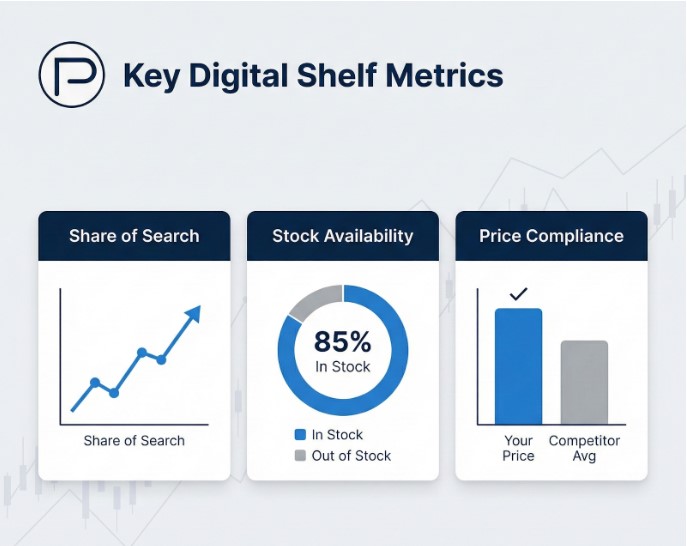
The foundation of any successful monitoring program is built on a core set of digital shelf metrics for brands. Each metric provides a unique view into performance and highlights specific areas for improvement.
Content Compliance and Quality
Content compliance tracks whether product listings meet brand standards and retailer requirements, covering everything from images and titles to bullet points and A+ content. Incomplete or inconsistent content hurts both discoverability in search and the final conversion rate.
Search Position and Share of Search
Search position is where your product ranks for relevant keywords, while share of search measures your brand’s visibility relative to competitors. Both are crucial leading indicators of sales performance.
Price Monitoring and Competitor Pricing
This involves tracking your product prices against MAP (Minimum Advertised Price) policies and monitoring competitor pricing. Price gaps can significantly affect buy box win rates and overall consumer perception of your brand’s value.
Stock Availability and Out-of-Stock Tracking
This metric involves monitoring in-stock rates across all retailers and channels. Given the immediate revenue impact of stockouts, the value of receiving early alerts cannot be overstated, as it allows teams to prevent lost sales.
Ratings and Reviews Performance
Tracking review volume, average star rating, and sentiment trends is critical. Customer reviews are a powerful form of social proof that directly influences both search algorithm rankings and consumer purchase decisions.
Category and Competitive Intelligence
Category monitoring involves tracking your brand’s position within broader product categories. This provides vital competitive intelligence on new market entrants, competitor assortment changes, and promotional strategies.
How Digital Shelf Analytics Software Works
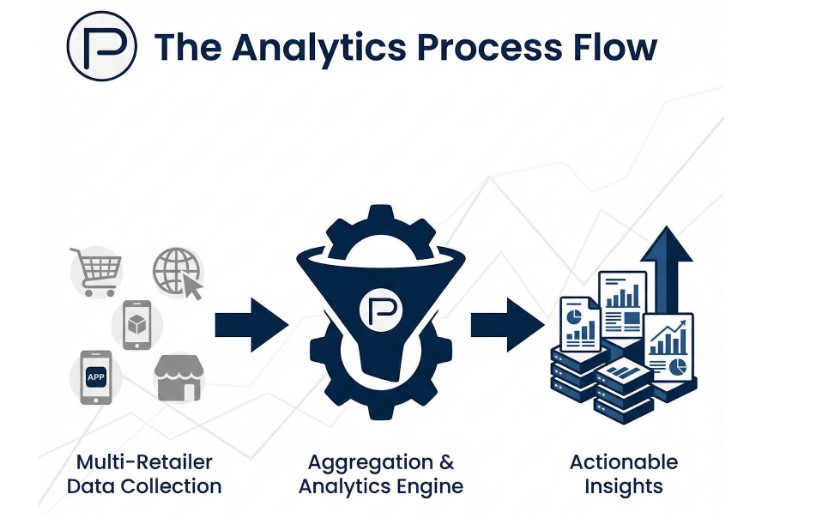
Digital shelf analytics software and digital shelf solutions are the engines that power modern monitoring. These platforms automate the complex process of collecting, aggregating, and presenting digital shelf data to make it understandable and actionable.
- Multi-Retailer Data Collection and Aggregation
The software automatically crawls and collects publicly available data from a wide range of marketplaces and retailer websites. It then cleans and normalizes this data, presenting it in a single, unified view for easy analysis.
- Automated Alerts and Real-Time Tracking
A key feature is the use of automated alerts that notify teams in real-time when key metrics fall outside of acceptable thresholds. This includes instant notifications for critical issues like stockouts, unauthorized price drops, or negative content changes.
- Customizable Dashboards and Scorecards
Customizable dashboards allow teams to visualize key performance indicators (KPIs) at a glance, tailored to their specific goals. Scorecards provide standardized, easy-to-read performance snapshots that can be compared across different products, retailers, and channels.
- Integration with eCommerce and Marketing Systems
Leading digital shelf software is designed to integrate seamlessly with other critical business systems. By connecting with PIMs, advertising platforms, and internal analytics tools, these solutions streamline workflows and empower teams to take immediate, data-driven action.
Digital Shelf Management Best Practices
Effective digital shelf management requires a strategic approach. The following best practices provide actionable guidance for brands looking to master their online presence:
- Establish baseline metrics: Know your starting point before optimizing.
- Prioritize high-impact SKUs: Focus monitoring resources on top sellers and hero products.
- Set clear ownership: Assign accountability for content, pricing, and availability.
- Create response playbooks: Define actions for common issues (stockouts, content errors, price violations).
Review performance regularly: Schedule weekly or monthly reviews to spot trends.
How to Turn Digital Shelf Data into Actionable Insights
Data alone isn’t valuable; the goal of digital shelf intelligence is to drive informed decision-making. True shelf analytics must be translated into concrete actions that improve performance. To bridge this gap:
- Connect metrics to business outcomes: Link search rank improvements to sales lift.
- Identify root causes: Investigate why content fails or stockouts occur.
- Prioritize by impact: Focus on fixes that will move the needle most.
- Close the loop: Track whether the actions you took actually improved performance.
Platforms like Paxcom’s Kinator are designed specifically to surface these actionable insights, not just present raw data.
Common Digital Shelf Monitoring Mistakes to Avoid
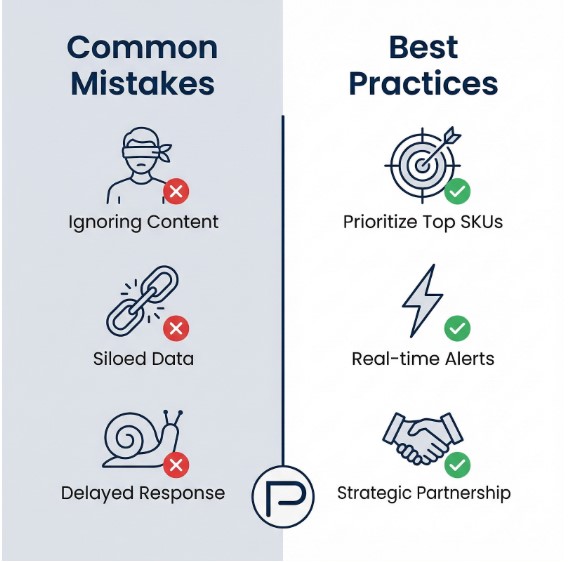
Even with the right tools, certain pitfalls can undermine a digital shelf monitoring program. Avoiding these common mistakes is crucial for success.
Tracking Too Few Channels or Marketplaces
Limiting monitoring to only one or two major retailers creates significant blind spots. Brands need comprehensive visibility across all online channels where their products are sold to get a complete picture of their performance.
Prioritizing Data Volume Over Actionability
It’s easy to drown in dashboards and data points without clear next steps. The best digital shelf analytics providers deliver actionable insights and recommendations, not just overwhelming volumes of information.
Ignoring Product Content Quality
Many brands focus heavily on price and stock availability while neglecting product content. This is a critical error, as content quality directly impacts both search ranking and the ultimate conversion rate.
Delaying Response to Stockouts and Pricing Changes
Slow response times carry a high cost in lost sales and damaged brand perception. Real-time alerts are only valuable if teams are empowered and equipped to act on them quickly.
Siloing Digital Shelf Intelligence from Strategy
Digital shelf intelligence should not exist in a vacuum or a standalone report. This data is a vital input that must be used to inform and shape the broader eCommerce and marketing strategy.
How to Evaluate Digital Shelf Analytics Providers
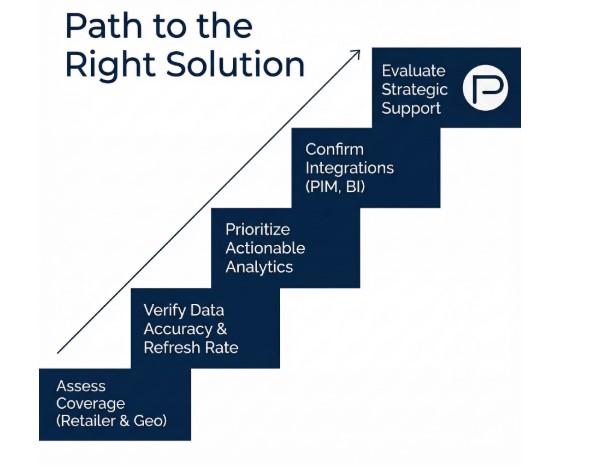
Selecting the right digital shelf analytics provider or digital shelf solution is a critical decision. This step-by-step guide can help you evaluate potential partners.
Step 1: Assess Marketplace and Geographic Coverage
First, confirm that the provider covers all the essential retailers and geographic regions where you sell. This is especially important for global brands that need a consolidated view across different markets.
Step 2: Verify Data Accuracy and Refresh Frequency
Stale or inaccurate data leads to poor decisions. Ask potential providers about their data sources, verification processes, and the refresh frequency (update cadence) to ensure you’re acting on timely information.
Step 3: Prioritize Actionable Analytics Over Raw Data
Evaluate whether the platform is designed to surface insights and clear recommendations. A superior solution will guide you toward action, not just present dashboards full of raw numbers.
Step 4: Confirm Integration and Reporting Capabilities
Ensure the solution can integrate with your existing technology stack (e.g., PIM, BI tools) to create a seamless workflow. Additionally, confirm that its reporting capabilities are flexible and support the formats your team needs.
Step 5: Evaluate Strategic Support and Partnership Potential
The best providers act as strategic partners. Consider whether they offer hands-on support and expertise, not just a software license. For example, Paxcom combines its technology with expert services to help brands effectively act on insights.
Build a Winning Digital Shelf Strategy with the Right Digital Shelf Solutions
Effective digital shelf monitoring is no longer optional—it is foundational to eCommerce success in a competitive landscape. The right partner is one that combines powerful digital shelf analytics software with deep strategic expertise to guide your actions. Paxcom’s Kinator platform and digital shelf analytics services are purpose-built for brands seeking actionable shelf intelligence across global marketplaces, helping you turn data into a competitive advantage.
[Request A Demo] to see how Paxcom helps brands optimize their digital shelf performance.