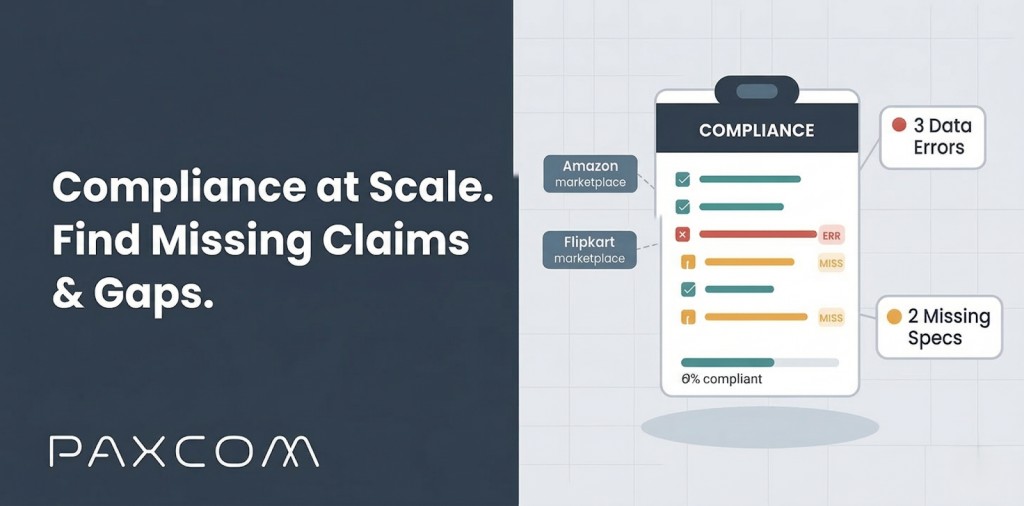
Content Compliance Across Marketplaces: Detect Missing Claims, Specs, and Product Data Error
Table of Contents
The Hidden Problem in Product Content Compliance Across Marketplaces
Imagine managing a catalog of thousands of SKUs across multiple marketplaces.
Your team has optimized product images, improved titles, and even increased advertising spend. Yet some products still struggle with visibility, discoverability, or conversion.
Often, the issue isn’t creative quality or marketing investment.
It’s missing information.
A product may lack critical specifications, miss important claims, or contain incomplete attributes required by marketplace algorithms. These gaps might seem minor, but they can quietly affect search visibility, listing eligibility, and customer confidence.
At small scale, teams can manually review listings and correct errors. But as catalogs grow across marketplaces, maintaining accurate product data becomes significantly more complex.
This is where content compliance across marketplaces becomes essential.
In this guide, we explore how brands can detect missing claims, specifications, and product data errors across marketplaces, and build systems that prevent these gaps from impacting performance.
Why Content Compliance Breaks at Scale?
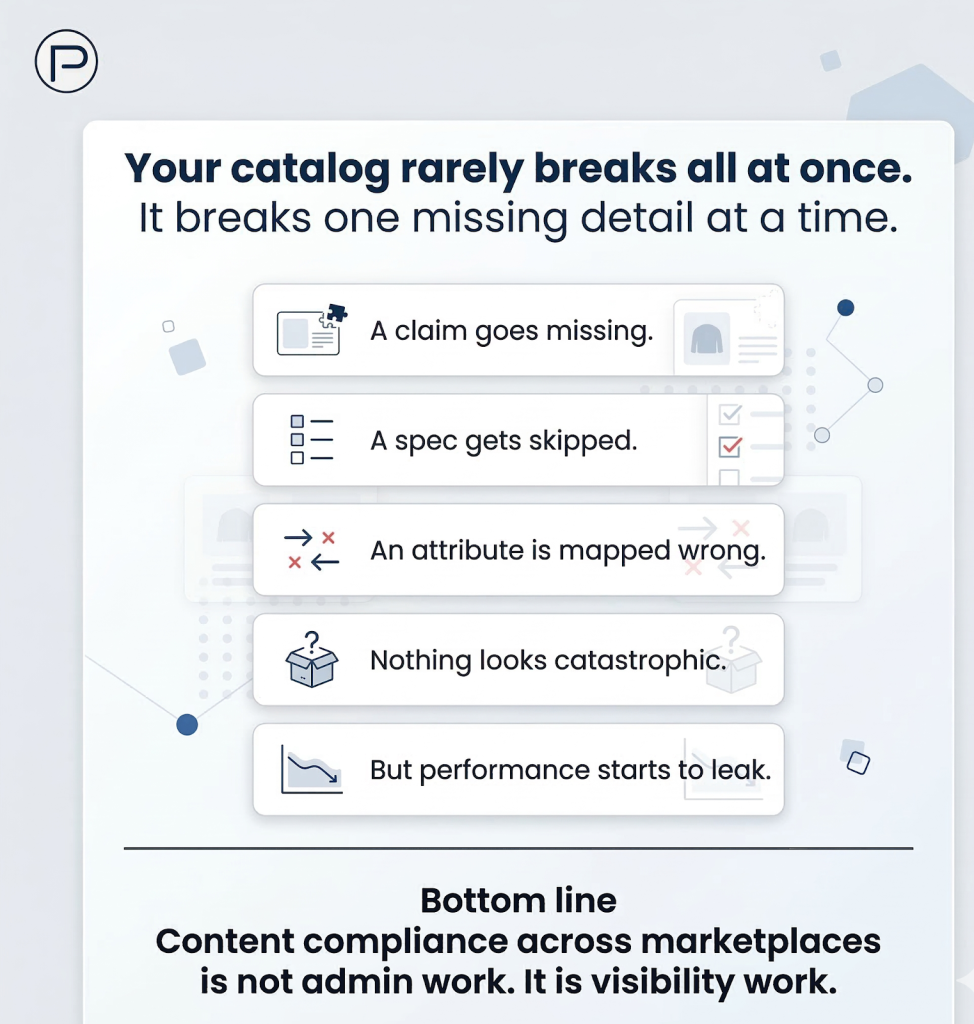
For brands managing a small catalog, ensuring product content accuracy is relatively straightforward. However, as digital commerce operations expand, several structural challenges begin to appear.
- Fragmented product data
Product information often lives across spreadsheets, PIM systems, marketplace dashboards, and agency workflows. As a result, the same product may display different specifications or claims depending on the platform. - Manual audits stop scaling
Manually reviewing product listings becomes unrealistic once catalogs grow to hundreds or thousands of SKUs. - Marketplace requirements constantly evolve
Platforms frequently introduce new attributes, compliance requirements, or structured data fields. Products that were previously compliant can quietly become incomplete. - Content updates happen in silos
Marketing teams update imagery and descriptions, operations teams manage listings, and performance teams focus on advertising. Without centralized monitoring, important product attributes often get overlooked.
Over time, these challenges lead to a catalog filled with small but critical compliance gaps that affect product visibility and trust.
The Most Common Content Compliance Across Marketplaces Gaps Brands Miss
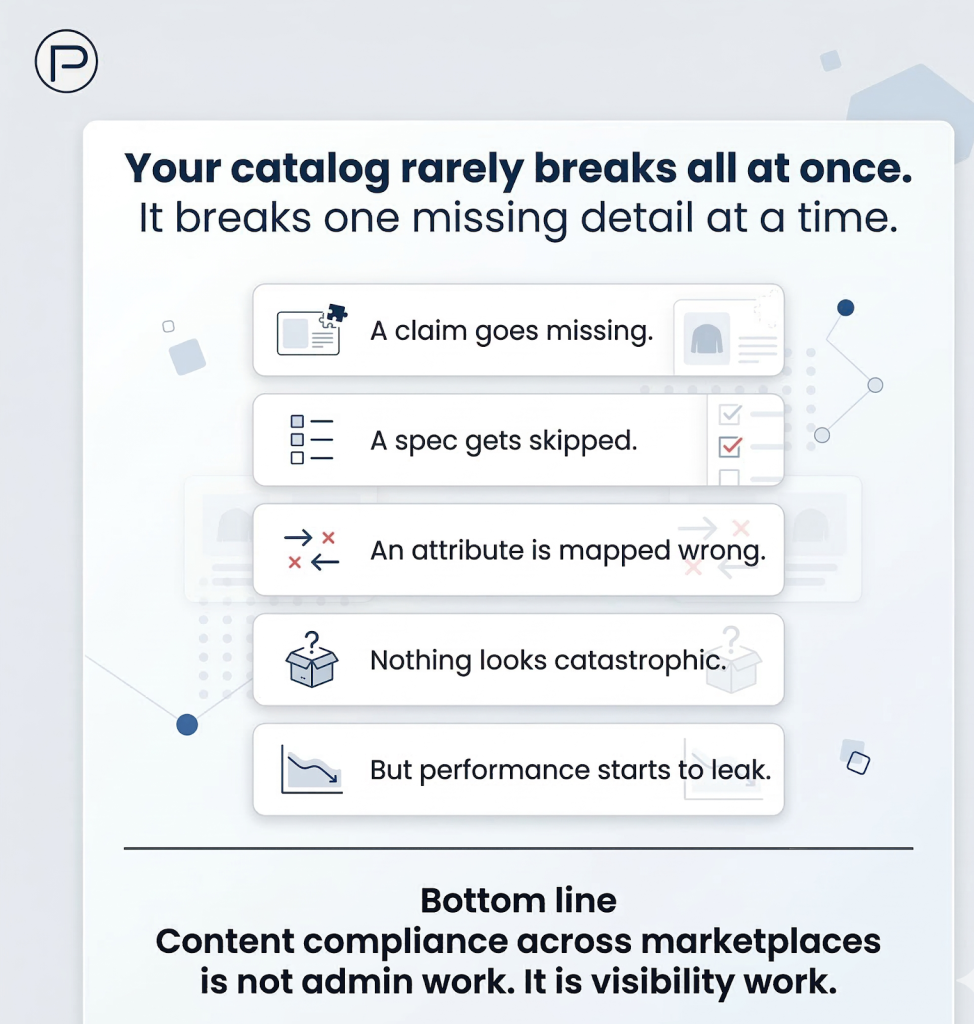
When brands begin auditing their product content at scale, several recurring issues emerge.
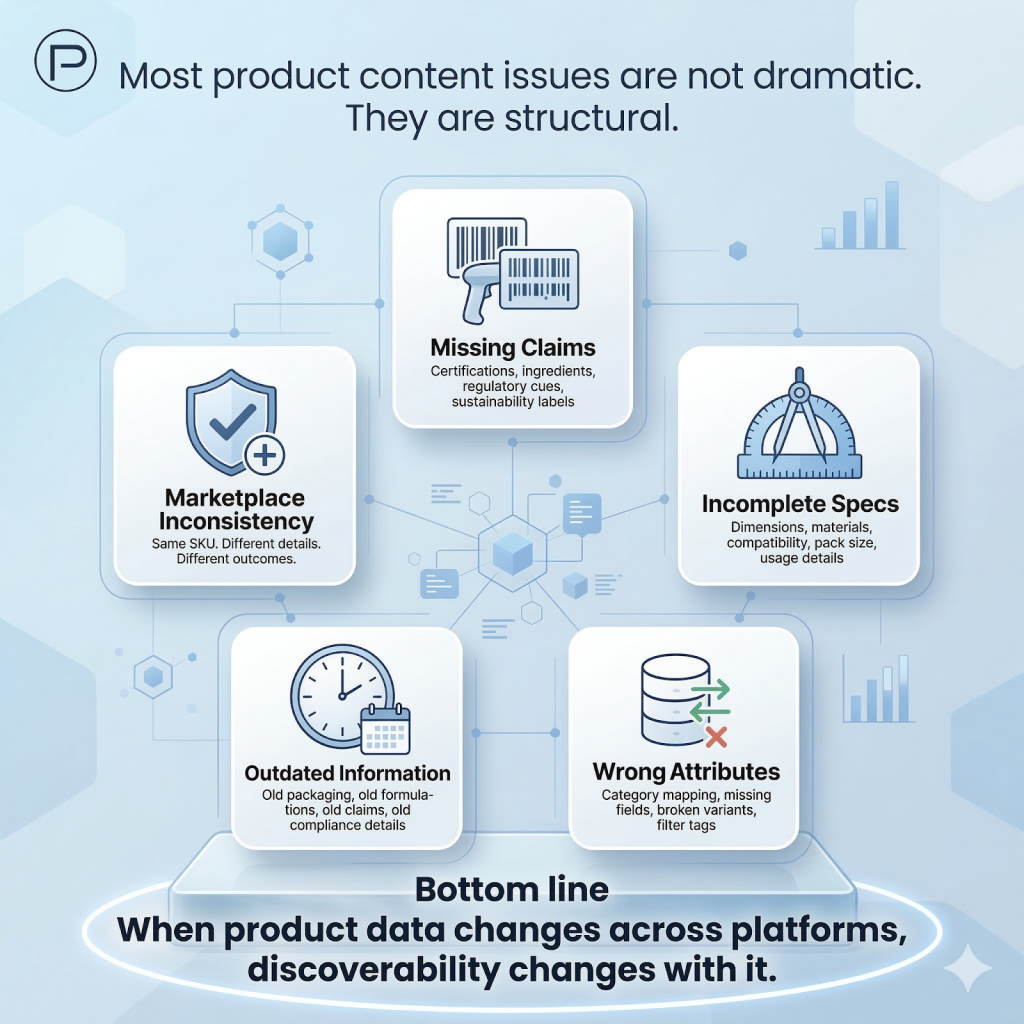
- Missing Product Claims
Claims such as certifications, ingredient highlights, or regulatory labels often influence both consumer trust and marketplace filters.
Commonly missed claims include:
- Organic or natural certifications
- Dermatologically tested labels
- Sustainability or eco claims
- Dietary claims such as gluten-free or sugar-free
If these claims are not properly structured in product attributes, products may fail to appear in filtered search results.
- Incomplete Product Specifications
Consumers rely on specifications to make purchase decisions. However, many listings miss critical details such as:
- product dimensions and weight
- materials or ingredients
- compatibility information
- pack size or quantity
Incomplete specifications often lead to lower search visibility and weaker conversion performance.
Check product listing guidelines for Amazon here
- Incorrect or Missing Attributes
Attributes power marketplace filters, category placement, and recommendation algorithms.
Common issues include:
- incorrect category mapping
- missing attribute fields
- improper variant information
- inconsistent filter tags
Even when descriptions are accurate, poor attribute mapping can significantly reduce discoverability.
- Outdated Product Information
Product content changes over time due to packaging updates, regulatory changes, or product reformulations.
Yet many listings continue displaying old claims or outdated specifications, which can create compliance risks and customer confusion.
- Inconsistent Content Across Marketplaces
One of the biggest challenges for brands operating across multiple platforms is content inconsistency.
The same product may display:
- different specifications
- different claims
- different attributes
on different marketplaces.
These inconsistencies affect both brand credibility and algorithmic ranking.
A Practical Ramp Plan for Content Compliance Across Marketplaces
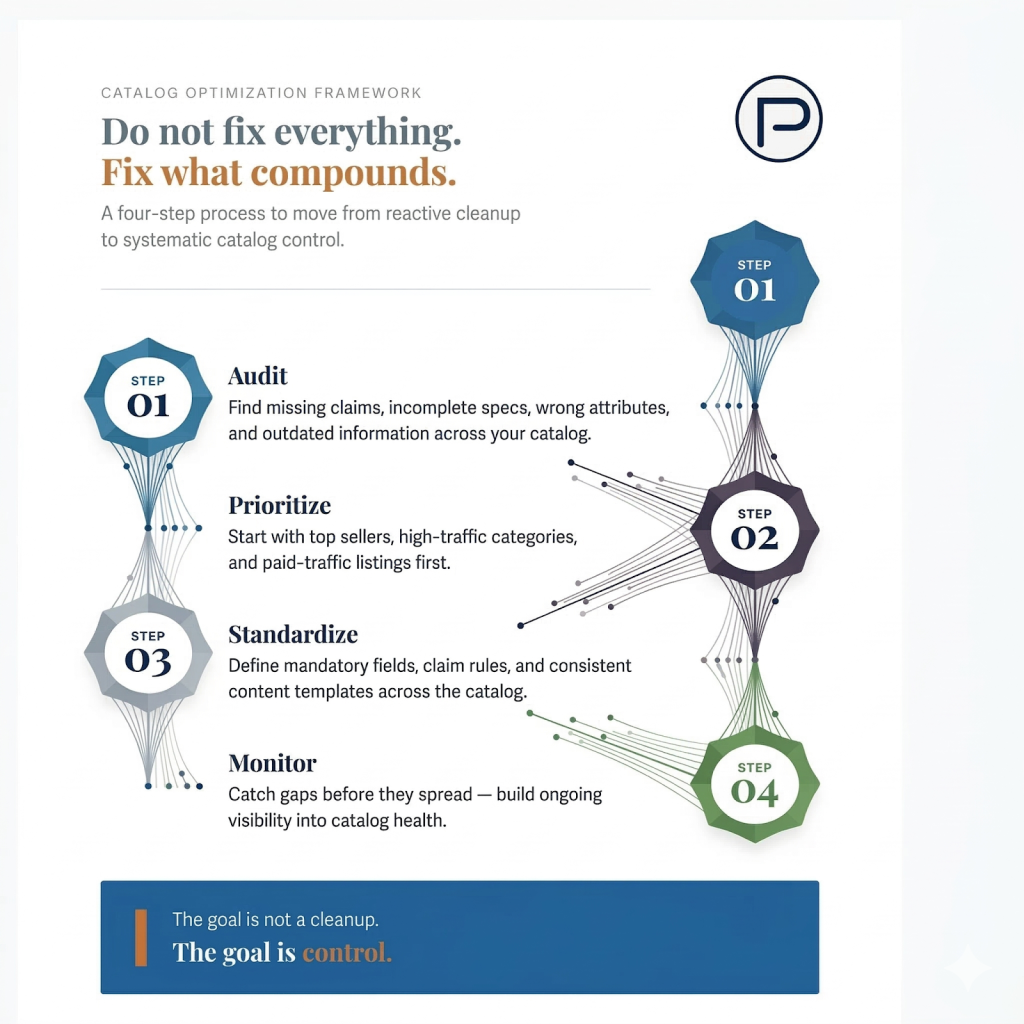
Improving content compliance across large catalogs requires a structured approach. Instead of attempting to fix everything at once, successful brands follow a phased ramp plan.
Week 1: Audit the Catalog
Start with a structured audit of your existing product listings.
Focus on identifying:
- missing product claims
- incomplete specifications
- incorrect attributes
- outdated product information
Many brands begin by reviewing their top-selling SKUs, as these have the greatest performance impact.
Week 2: Fix High-Impact Gaps
Once the audit identifies common gaps, prioritize corrections.
Focus on:
- best-selling products
- high-traffic categories
- listings with strong advertising investment
Correct missing attributes, add specifications, and update outdated claims.
Week 3: Standardize Product Content Structure
To prevent recurring compliance issues, brands should establish standardized content templates.
These templates define:
- mandatory product attributes
- claim validation rules
- structured product specification fields
Standardization ensures product information remains consistent across marketplaces.
Week 4: Implement Continuous Monitoring
Content compliance should not be a one-time exercise.
Instead, brands should monitor product content continuously to detect:
- missing attributes
- content inconsistencies
- specification gaps
- claim inaccuracies
Digital shelf monitoring systems can help detect these issues automatically across large catalogs.
Creative and PDP Requirements for Compliance
Strong product pages combine creative storytelling with structured product data.
A compliant and high-performing PDP typically includes:
- clearly defined product specifications
- validated product claims
- structured attribute fields
- consistent content blocks across marketplaces
- updated imagery and packaging information
When structured correctly, PDP content supports both search algorithms and customer decision-making.
The “First 10 Campaigns” Style Compliance Checklist
Before attempting large-scale catalog fixes, brands can start with a simple exercise.
Review the top 10 products in your catalog and check for:
- missing claims or certifications
- incomplete product specifications
- incorrect attribute mapping
- inconsistent titles across marketplaces
- outdated packaging claims
If multiple issues appear within the top SKUs, the rest of the catalog likely contains similar gaps.
This exercise helps teams quickly estimate the true scale of content compliance challenges.
Retail content management cheat sheet for managing Indian eCommerce MarketplacesHow Leading Brands Manage Content Compliance at Scale?
Brands that maintain high digital shelf performance typically move beyond manual processes.
They adopt systems that combine:
- centralized catalog management
- structured product content templates
- digital shelf monitoring
- automated attribute validation
These systems allow teams to identify and fix compliance gaps before they affect visibility or sales performance.
Why Content Compliance Is Now a Visibility Problem?
Content compliance is no longer just a regulatory or operational concern.
It directly affects product discoverability and conversion performance.
Missing attributes, incomplete specifications, and inconsistent claims can cause products to:
- appear lower in search results
- miss filter-based discovery
- lose trust with customers
As marketplace algorithms and AI-driven discovery systems continue evolving, structured product data will play an even greater role in determining which products get seen.
5 Signals That Your Catalog Has Content Compliance Issues
Content compliance problems often remain hidden until they begin affecting performance. However, several operational signals can indicate that product data gaps already exist within a catalog.
Recognizing these signals early allows brands to address compliance issues before they begin affecting discoverability or sales.
1. Products Fail to Appear in Filter-Based Searches
Many marketplaces rely heavily on structured product attributes to power filters such as:
- dietary preferences
- material types
- certifications
- size or compatibility
If claims or attributes are missing or incorrectly mapped, products may not appear in filtered search results even when they are relevant.
2. High Traffic but Low Conversion Rates
When listings receive consistent traffic but struggle to convert, incomplete specifications may be a contributing factor.
Customers rely on clear product details such as dimensions, ingredients, compatibility, and usage instructions to make purchase decisions. Missing information can create hesitation during the buying process.
3. Inconsistent Product Information Across Marketplaces
If the same product displays different specifications, claims, or attributes across marketplaces, it often indicates fragmented product data management.
This inconsistency can weaken brand credibility and confuse both algorithms and customers.
4. Frequent Catalog Corrections
Teams that repeatedly fix attribute issues, missing fields, or incorrect specifications during listing updates are likely dealing with systemic content compliance gaps.
Without standardized product content structures, these errors tend to reappear over time.
5. Marketplace Warnings or Listing Suppressions
Marketplaces occasionally suppress or flag listings due to incomplete attributes, missing regulatory information, or inaccurate product claims.
While these warnings may appear isolated, they often indicate broader catalog compliance issues.
Final Words
Brands often focus on improving advertising performance, creative assets, or promotional strategies.But without accurate and complete product data, these efforts may never reach their full potential.
Detecting and fixing missing claims, specifications, and product data errors at scale is becoming a core capability for modern commerce teams. Identifying these signals early is critical for brands managing large product catalogs.
Paxcom helps brands detect content compliance gaps across marketplaces through structured digital shelf monitoring and catalog intelligence systems.
If you suspect product data inconsistencies may be affecting your catalog performance, consider conducting a digital shelf content audit.
📩 Request a catalog compliance audit: info@paxcom.net
People Also Ask