TL;DR
Dive into the latest eCommerce marketing strategies & trends across eCommerce platforms. The blog uncovers a marketplace maturity model followed by a platform deep dive into top online ecommerce platforms today
Introduction
You’re browsing your favorite online store for a new pair of noise-cancelling headphones. As you scroll, the platform seems to know exactly what you want, showing you top-rated deals, tailored offers, and timely discounts. This is no accident. It’s the result of data-driven, AI-enhanced advertising, an essential component of today’s online eCommerce business strategy.
India’s digital commerce market is expected to reach $200 billion by 2027, with marketplace advertising leading the charge. Whether you’re a small seller or an enterprise brand, understanding where your business stands and how to scale is key to long-term success. That’s why we’ve structured this guide around two parts: the Marketplace Advertising Maturity Model and the 11 Key Trends Driving Performance in 2026.
What Is eCommerce Advertising?
eCommerce advertising is the strategic use of paid placements across online platforms, like Amazon, Flipkart, Google, and Meta, to drive traffic, conversions, and revenue. It includes search ads, display ads, sponsored listings, and programmatic placements designed to reach customers at various stages of the buying journey.
ECommerce Platforms: Marketplace Advertising Maturity Model
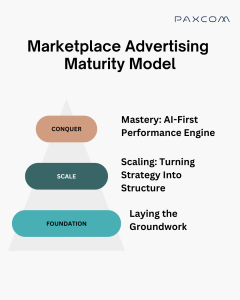
Every brand runs ads. But not every brand runs them well. This marketplace advertising maturity model helps businesses identify their current level and what it takes to level up.
Stage 1: Foundation: Laying the Groundwork
- Manual campaign setup on platforms like Amazon or Flipkart
- Limited targeting or segmentation
- Small, flat budgets with minimal optimization
- Focused mainly on basic visibility
Stage 2: Scaling: Turning Strategy Into Structure
- Cross-platform presence (Amazon, Flipkart, Google, Meta)
- Early-stage automation (bid pacing, A/B testing)
- Data-informed budget shifts and channel priorities
- Entry-level support from eCommerce marketing agencies
Stage 3: Mastery: AI-First Performance Engine
- Predictive budgeting, real-time performance tuning
- Creative versioning based on customer behavior
- Integrated measurement across marketplace and media touchpoints
11 Key eCommerce Advertising Trends To Follow
In 2026, eCommerce advertising is no longer about simply showing ads, it’s about delivering personalized, data-backed, and platform-specific messages that build trust and drive action. These eleven trends form the backbone of a competitive eCommerce marketing strategy in today’s rapidly evolving digital commerce landscape.
1. Buyer Persona Development
Modern advertising begins with a clear understanding of your customer. Building buyer personas helps businesses personalize ad content, select the right platforms, and communicate value more effectively. Effective personas are built using first-party data, surveys, shopping behavior, and platform-specific engagement metrics. For instance, a Gen Z buyer in Tier 1 cities may respond more to social commerce on Instagram, while a middle-aged buyer in Tier 2 cities may rely on Amazon and Flipkart searches.
2. Realistic Goal Setting with Performance Benchmarks
In a cluttered ad environment, setting the right goals is critical. Brands must move beyond vanity metrics and track performance indicators like Return on Ad Spend (ROAS), Customer Acquisition Cost (CAC), and Cost per Conversion. Setting achievable targets tied to funnel stages helps maximize budget use and justify spending across eCommerce marketing services.
3. Competitor Benchmarking and Intelligence Gathering
Competitor analysis isn’t just about watching ad creatives, it’s about understanding bidding strategies, frequency caps, placements, and promotions. Digital shelf analytics tools are being used by eCommerce marketing agencies frequently to reverse-engineer what’s working for leading brands and replicate success using data-driven decisions.
4. Retail Media Network (RMN) Expansion
RMNs are transforming how brands advertise on marketplaces. Platforms like Amazon Ads, Flipkart Ads, Walmart Connect, and Instacart offer native, high-intent placements powered by first-party data. Brands are now allocating a bigger chunk of their digital budget to RMNs for better targeting and measurable outcomes. This trend is key for brands looking to scale in the online eCommerce business space.
5. Omnichannel Campaign Management
Consumers move fluidly between channels, and your ads must follow. Omnichannel campaign management involves synchronized ad delivery across Amazon, Meta, Google, Flipkart, and even WhatsApp. This approach not only reinforces brand recall but also improves conversion through consistent messaging. Platforms like Pacvue and Kenshoo are helping streamline this effort.
6. AI-Driven Personalized Targeting
Artificial intelligence is powering real-time dynamic ads. AI systems analyze user behavior, search history, and purchase patterns to deliver tailored product suggestions and messages. Personalized targeting increases engagement, lowers bounce rates, and significantly boosts ROI. Advanced platforms can even adjust creative elements such as headlines, colors, and product images based on user profiles.
7. AI-Powered Predictive Personalization
Beyond reactive targeting, predictive personalization anticipates what customers want next. Using machine learning, brands can predict future behavior such as reorders, seasonal interest, or brand switching. This trend allows brands to preemptively serve the right products, messages, and offers—especially powerful in retention campaigns and email retargeting.
8. Voice Search and Conversational Commerce Optimization
As consumers use Alexa, Google Assistant, and Siri for shopping-related queries, optimizing content for voice becomes crucial. This involves using natural language phrases in ad copy and product descriptions. Long-tail keywords like “best running shoes under 5000” or “top-rated Bluetooth speaker for home” match how people speak, and they improve visibility in both organic and paid placements.
Read this excerpt on how voice commerce has become the future of shopping
9. Automated Campaign Management and Smart Bidding
Manual campaign tweaks are becoming obsolete. Platforms like Amazon Ads, Flipkart Ads, and Google Ads now offer intelligent automation for bid adjustments, keyword management, and budget pacing. These systems continuously learn and optimize for best performance, freeing up time for strategic tasks. Automation ensures consistent performance without daily micromanagement.
10. Creative Content as a Performance Lever
While data fuels performance, it’s still creative that catches attention. In 2025, creative strategy is no longer just about good visuals—it’s about performance-first content tailored for each platform. High-performing ads use formats like:
- Shoppable videos on Amazon and Flipkart
- Carousel ads and story reels on Instagram and Facebook
- Interactive quizzes or product demos on landing pages
For example, Flipkart’s Product Shorts feature lets brands tell a story in under 30 seconds, while Amazon’s video in search increases click-through rates by over 20%. Creative A/B testing and dynamic creative optimization (DCO) help find the most engaging formats and styles for specific audiences.
Brands that invest in unique, platform-native storytelling consistently outperform those relying on generic ad templates.
11. Evolving Ad Measurement and Attribution
As eCommerce advertising becomes more complex, traditional metrics like CTR and impressions are no longer sufficient. Brands are turning to:
- Multi-touch attribution models
- Incrementality testing
- Customer lifetime value (CLV) analysis
Tools like Amazon Marketing Cloud (AMC), Flipkart Pulse, and Google’s Data-Driven Attribution (DDA) model help advertisers understand the full impact of their ads across touchpoints. This shift ensures budgets are optimized not just for immediate sales but for long-term brand growth and repeat purchase behavior.
Advertisers embracing this trend are more agile in reallocating spending, refining audiences, and aligning creative with high-value customer journeys. High-performing ads now use platform-specific formats such as shoppable videos on Amazon, carousel ads on Instagram, and interactive story formats on Flipkart. Creative testing (A/B or multivariate) has become essential. Brands that invest in visual storytelling outperform those relying on generic templates.
Whether it’s aligning your campaigns with buyer personas, leveraging the capabilities of retail media networks, or exploring the potential of AI-driven automation, the landscape of eCommerce marketing services is undergoing a transformation. Businesses looking to scale must integrate these trends into their core operations to stay competitive and relevant in the advertising space.
Each trend is not only a reflection of changing technology but also of shifting customer expectations. By working with experienced eCommerce marketing agencies or building in-house capability, brands can create a sustainable and scalable eCommerce marketing strategy that drives growth and delivers measurable impact.
eCommerce Platforms In India
Choosing the right eCommerce platform is no longer just about reach. It is about audience fit, ad sophistication, and the ability to convert visibility into revenue. As online eCommerce platforms continue to evolve, brands must align their advertising strategy with the unique strengths of each marketplace.
Amazon
In 2024, Amazon’s ad revenue crossed $56 billion. Sponsored Products, Brand Stores, DSPs, and Video Ads are driving deeper engagement. Amazon now offers automated ad management and AI-powered targeting tools that elevate campaign effectiveness.
Flipkart
With over 500M users, Flipkart offers robust advertising through Product Listing Ads (PLA) and Product Contextual Ads (PCA). Real-time dashboards, performance reporting, and tiered targeting options make it a must-use for brands eyeing India’s mobile-first audience.
Meesho
As one of India’s fastest-growing social commerce platforms, Meesho offers a unique advertising opportunity, particularly for small businesses and independent resellers. With over 140 million users and a strong presence in Tier 2 and Tier 3 cities, Meesho allows brands to tap into a highly price-sensitive, mobile-first audience through influencer-led discovery and direct selling models. Advertising on Meesho often focuses on product visibility through banner placements, curated deals, and performance-based product boosts—making it an emerging player in India’s eCommerce ad ecosystem.
Myntra
When it comes to fashion, lifestyle, and beauty, Myntra commands exceptional influence. Its advertising ecosystem allows brands to leverage premium placements, search ads, collection sponsorships, and event-led visibility during marquee sales like the End of Reason Sale. For fashion-forward brands, Myntra offers one of the most targeted and high-intent advertising environments among Indian online eCommerce platforms.
Nykaa
Nykaa has emerged as the preferred eCommerce platform for beauty, personal care, and luxury brands. Its closed-loop ecosystem, highly engaged audience, and content-commerce integration create a powerful environment for discovery and conversion. Sponsored listings, banner advertising, brand stores, and influencer collaborations make Nykaa particularly valuable for brands aiming to win in high-consideration categories.
No single eCommerce platform fits every brand. The most effective advertising strategies are built by understanding where your customers shop, how they discover products, and which online eCommerce platforms best support your category, pricing, and growth ambitions.
How to Level Up with Paxcom
Whether you’re laying your foundation, scaling up, or optimizing your performance engine, Paxcom’s eCommerce marketing services deliver end-to-end campaign management, AI-driven targeting, and full-funnel analytics to help brands grow.
Book a free strategy call or email us at info@paxcom.net to unlock your next growth stage.
Ready to Activate These Trends?
Want help applying these strategies to your eCommerce brand? Paxcom’s ad experts deliver full-funnel campaign execution across Amazon, Flipkart, and more.
Book your free ad strategy audit now
Frequently Asked Questions