TL;DR
Off-the-shelf AI platforms promise scale, but deliver low adoption and generic outputs. Custom AI flips the model — focusing on specific workflows, real data, and measurable outcomes.
The shift is clear: From buying platforms → to building purpose-driven capabilities
Brands that win with AI don’t use more features. They use the right ones — deeply integrated into their business.
Introduction: Custom AI Solutions For eCommerce
You invested in an AI platform.
The demo was compelling. The possibilities felt endless.
Fast forward a few months and your team is using just two or three features.
The rest? Untouched.
This isn’t a usage problem. It’s a fit problem.
The Illusion of Full-Stack AI Platforms
Most AI platforms are designed to be broad. They promise versatility across use cases, teams, and workflows. On paper, that flexibility feels like future-proofing.
In reality, it often leads to partial adoption.
A few features align with your immediate needs, so they get used. The rest remain irrelevant to your workflows, your data, and your operational priorities. Over time, the platform becomes a mix of underutilised capabilities and unresolved business challenges.
Breadth creates perception. Relevance drives adoption.
The Hidden Cost of Misfit AI
The real cost of off-the-shelf AI isn’t just unused features. It’s everything wrapped around them.
1. Operational drag
Onboarding takes longer because the platform isn’t built for your workflows. Teams spend time adapting to the tool instead of the tool adapting to them.
2. Financial inefficiency
You’re priced for the full suite, even if you’re using only a fraction of it. ROI becomes difficult to measure because impact is diluted.
3. Cognitive overload
Teams are forced to learn systems they don’t need. This slows adoption and creates friction instead of efficiency.
The problem isn’t that AI isn’t powerful. The problem is that it isn’t contextual.
Why Off-the-Shelf AI Breaks in Real Workflows
There is a fundamental mismatch between how platforms are built and how businesses actually operate.
| AI Platforms | Businesses |
| Built for scale | Run on specificity |
| Generic workflows | Custom processes |
| Standard datasets | Proprietary data |
| Broad use cases | Defined outcomes |
Most businesses don’t need a tool that can do everything. They need a system that solves one problem exceptionally well.
The Overlooked Risk: Security and Control
Beyond adoption and efficiency, there’s a deeper layer that often goes unnoticed.
Generic AI platforms are built with broad configurations. While that enables flexibility, it also introduces risk.
- Wider permissions than required → Increased exposure
- Generic outputs → Lack of compliance with internal rules
- Limited business grounding → Outputs that ignore product, policy, or brand context
The more general the system, the harder it becomes to control.
In high-stakes environments like eCommerce and quick commerce, where product accuracy, compliance, and brand consistency are critical, this gap can directly impact performance.
The Shift: From Platforms to Purpose-Built AI
This is where the conversation is changing.
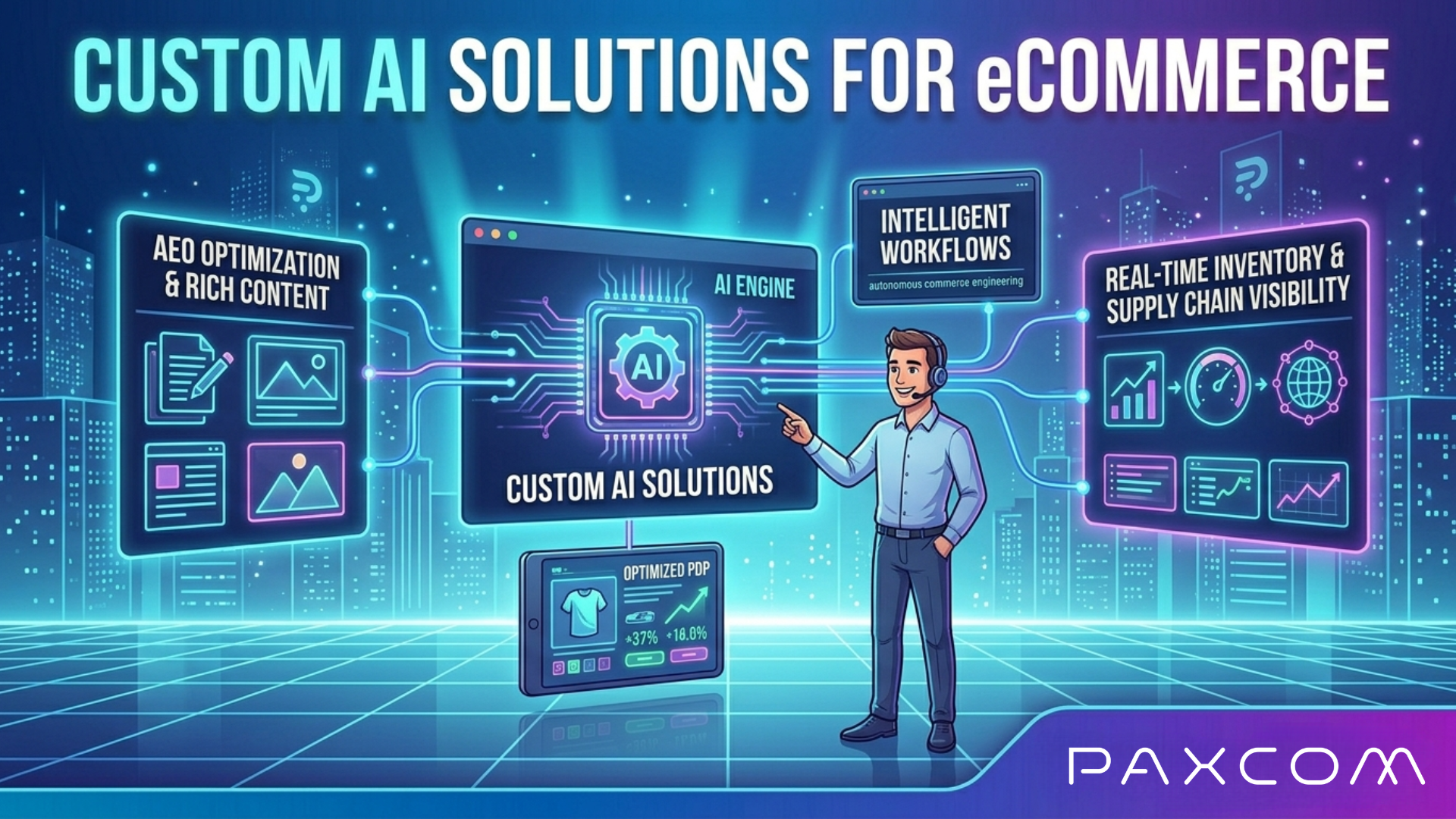
Instead of investing in full-scale platforms, leading brands are moving toward feature-based custom AI solutions, systems designed for a specific workflow, built around specific data, and optimised for specific outcomes.
Off-the-shelf AI scales features. Custom AI scales outcomes.
This shift is not theoretical, it’s already underway.
Custom AI is no longer emerging, it’s accelerating. The market is expected to reach $187.6 billion by 2030, growing at a 28.4% CAGR, as per McKinsey & Company and Gartner.
The reason is simple: businesses are realising that generic capability cannot replace contextual intelligence.
When Does Custom AI Actually Make Sense?
Not every business needs custom AI, and that’s where most conversations go wrong.
Custom AI becomes critical when:
- Workflows are repetitive but complex
(e.g., catalog enrichment, content standardisation) - Data is fragmented across platforms
(marketplaces, internal systems, analytics tools) - Decisions require business context
(pricing, compliance, content accuracy) - Scale creates inefficiency
(large SKU volumes, multi-platform presence)
If your challenge is generic, a platform may work.If your challenge is specific, customisation becomes non-negotiable.
Why Most AI Initiatives Fail (And How to Avoid It)?
Many AI investments don’t fail because of technology. They fail because of misalignment.
Common patterns:
- AI is adopted as a trend, not a solution
- Tools are selected before defining the use case
- Success is measured by adoption, not impact
This leads to a familiar outcome: high investment, low utilisation.
Avoiding this requires a shift:
- Start with business friction, not features
- Define clear success metrics
- Build for integration, not isolation
AI doesn’t fail at execution. It fails at relevance.
Build vs Buy vs Customize: Making the Right AI Decision
Most organisations frame AI decisions incorrectly as build vs buy.
The real decision framework is:
1. Buy (Off-the-Shelf Platforms)
Best for:
- generic use cases
- low complexity
- quick experimentation
Limitation:
- low contextual fit
2. Build (From Scratch)
Best for:
- highly specialised needs
- full control environments
Limitation:
- high cost and longer timelines
3. Customize (Hybrid Approach)
Best for:
- defined workflows
- existing data ecosystems
- need for speed + control
Advantage:
- balances scalability with relevance
The future isn’t build or buy. It’s build what matters, customise what scales.
What Feature-Based Custom AI Actually Looks Like?
Custom AI doesn’t start with technology. It starts with use cases.
A practical approach looks like this:
1. Start Narrow
Identify a single workflow where AI can remove friction or reduce manual effort.
This could be product content creation, catalog standardisation, or campaign optimisation.
2. Build Context-First
The solution is designed around:
- Your product data
- Your business rules
- Your output requirements
Not generic assumptions.
3. Scale Based on Proof
Expansion happens only after measurable impact.
Adoption drives scale, not initial ambition.
Build narrow. Scale when it earns it.
Why Custom AI Enables Better Control by Design
When AI is scoped to a specific purpose, control improves naturally.
- Role-based access ensures the right data reaches the right teams
- Approved data sources eliminate noise and improve accuracy
- Output controls enforce brand, compliance, and business logic
- Real-time context ensures outputs reflect current realities
This isn’t an added layer. It’s built into the system itself.
Where Custom AI Delivers Real Impact in eCommerce
In eCommerce, the value of AI is directly tied to how well it aligns with the digital shelf and operational workflows.
Custom AI solutions can drive impact across:
- Product content optimisation
Ensuring consistency, completeness, and compliance across marketplaces - Digital shelf visibility
Identifying gaps in discoverability and improving ranking signals - Catalog standardisation
Structuring large SKU datasets for better performance - Campaign optimisation
Aligning creatives, keywords, and targeting with real-time data - Decision intelligence
Turning fragmented data into actionable insights
This is where platforms often fall short — and where precision-driven systems outperform.
The Paxcom POV: AI That Fits the Workflow
At Paxcom, the approach to AI is not tool-first. It’s use-case-first.
Instead of asking, “Which AI platform should we use?” The focus shifts to: “Which workflow needs to be solved?”
That shift enables:
- Faster adoption
- Tighter control
- Measurable outcomes
The goal isn’t to use AI.It’s to make AI useful.
Conclusion: From Capability to Fit
The AI conversation is evolving.
It’s no longer about how many features a platform offers. It’s about how effectively those features translate into real business impact. Stop paying for capabilities you don’t use. Start building systems that actually solve.
Looking to identify where custom AI can drive impact in your eCommerce workflows?
Connect with Paxcom to build solutions tailored to your data, processes, and growth goals.
People May Also Like