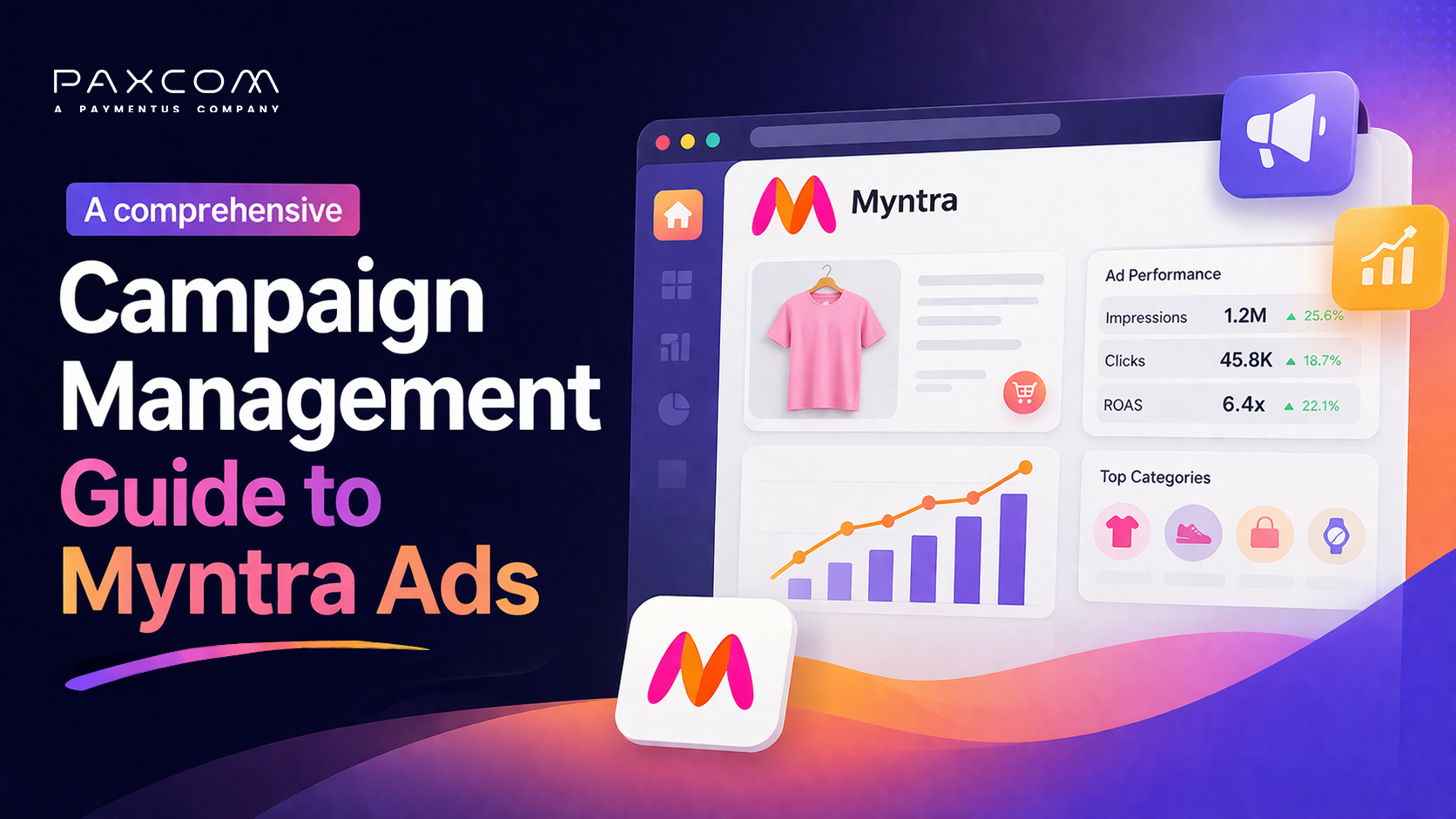
On Myntra, success isn’t just about what you sell; it’s about whether you’re seen. And visibility today isn’t organic. It’s engineered.
This is where Myntra Ads enters the picture. But not as a simple “boost your products” lever.
Instead, it functions as a structured retail media ecosystem, where performance is shaped by how well you manage campaigns, structure your catalog, and align with the platform’s algorithm, not just how much you spend.
For most brands, the challenge isn’t getting started. It’s effective campaign management, understanding what to push, how to structure campaigns, when to rely on automation, and how to scale without losing efficiency.
What makes Myntra different from other platforms?
Unlike utility-first marketplaces where users arrive with a fixed purchase intent, Myntra is inherently discovery-led. Users browse, explore, and discover — often influenced by visuals, trends, and styling cues.
This means Myntra Ads does not just capture existing demand. It creates demand within the browsing journey.
Success on Myntra requires feeding the system the right inputs and working with its algorithm, not against it.
What Myntra Ads Really Is?
Most brands approach Myntra Ads with a familiar mindset.
If they’ve run ads on marketplaces or search platforms before, the assumption is simple:
increase bids, improve visibility, drive more sales.
Myntra Ads isn’t just an advertising tool layered on top of a marketplace. It operates more like a retail media ecosystem, where visibility is deeply tied to how the platform understands both user intent and product relevance.
At the same time, Myntra behaves very differently from utility-first marketplaces. Users don’t always come with a fixed purchase intent. They browse, explore, and discover, often influenced by visuals, trends, and styling cues.
This makes the platform inherently discovery-led, not just search-led.
And that changes the role of advertising entirely. On Myntra, ads are not just about capturing demand that already exists. They are equally about creating demand within the browsing journey.
Because once you move away from the idea of “ads = direct sales,” you start seeing Myntra Ads for what it really is:
A visibility and discovery engine, tightly integrated with the platform’s shopping experience. And that’s exactly why campaign management on Myntra isn’t just about budgets and bids. It’s about working with the system, not against it.
The 3-Pillar Framework of Myntra Ads
Once you understand how users move through Myntra, the next step is to understand how advertising aligns with that journey. Because not all ads on Myntra serve the same purpose.
Some are designed to introduce your brand. Others are meant to capture active intent. And a few are focused purely on closing the sale. This is where a simple but powerful framework comes in, one that separates Myntra Ads into three functional roles:
Discovery, Intent Capture, and Conversion
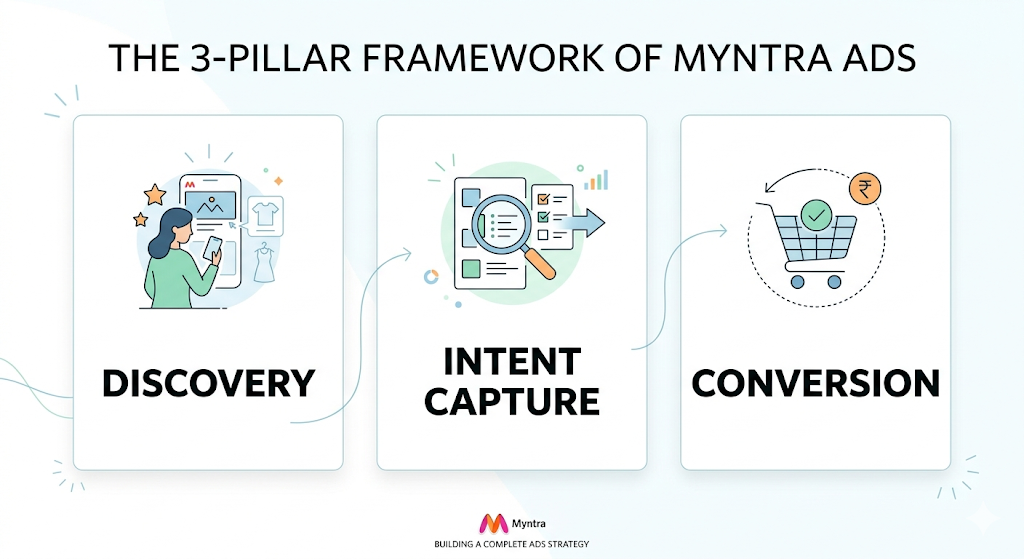
- Discovery: Creating Demand Within the Scroll
A large part of user behavior on Myntra is driven by exploration.
Users aren’t always searching with a fixed product in mind. They browse collections, trends, and curated feeds, often influenced by visuals more than keywords. This is where discovery-led formats come into play.
Display banners, homepage placements, video-led creatives, and native content integrations are all designed to interrupt passive browsing and introduce products in context. These formats rarely drive immediate conversions in isolation. But they play a critical role in ensuring that your brand enters the user’s consideration set early.
- Intent Capture: Winning the Moment of Decision
As users move from browsing to searching, behavior shifts.
Queries become more specific. Comparisons begin. Shortlists start forming.
This is where performance-led formats like product listing ads and keyword-driven placements become critical. Here, visibility is no longer about inspiration, it’s about relevance.
Showing up at the right time, for the right query, with the right product can directly influence purchase decisions. In fact, this layer often drives the majority of attributable revenue for brands.
- Conversion: Closing the Loop
Even after high intent is established, not every interaction leads to a purchase.
Users drop off. They compare alternatives. They revisit later.
Conversion-focused efforts, including retargeting placements and high-performing product ads, work to bring these users back and nudge them toward final purchase.
At this stage, small factors make a big difference:
- Pricing perception
- Availability of sizes
- Product ratings and reviews
Advertising ensures visibility, but conversion is often decided by these underlying signals. What makes this framework important is not just understanding each pillar in isolation, but recognising how they work together.
A user might first encounter your brand through a homepage banner, search for similar products later, click on a product ad, and eventually convert after multiple touchpoints.
This interconnected journey is why treating Myntra Ads as a single-layer performance channel often leads to suboptimal results.
Instead, brands that scale effectively tend to align their campaigns across all three pillars , ensuring they are visible not just when users are ready to buy, but also when they are still discovering what they want.
Another layer that shapes delivery is placement.
Ads can appear across multiple zones, from search results to product detail pages to the homepage, each carrying a different level of user intent.
Higher-intent placements, like top search positions, naturally demand more aggressive CPCs, while others play a supporting role in discovery and cross-sell.
All of this leads to a subtle but important shift in how brands should think about campaign management.
Success on Myntra isn’t about constant manual intervention. It’s about feeding the system the right inputs and letting it optimize efficiently.
Types of Myntra Ads (And How They Actually Work)
Once you understand how Myntra distributes visibility, the next step is to look at the formats that power this ecosystem.
At a broad level, Myntra’s advertising offerings can be divided into three core types, each playing a distinct role in how brands show up on the platform.
- Product Listing Ads (PLA Ads)
The most widely used and arguably the most critical are Product Listing Ads (PLA Ads).
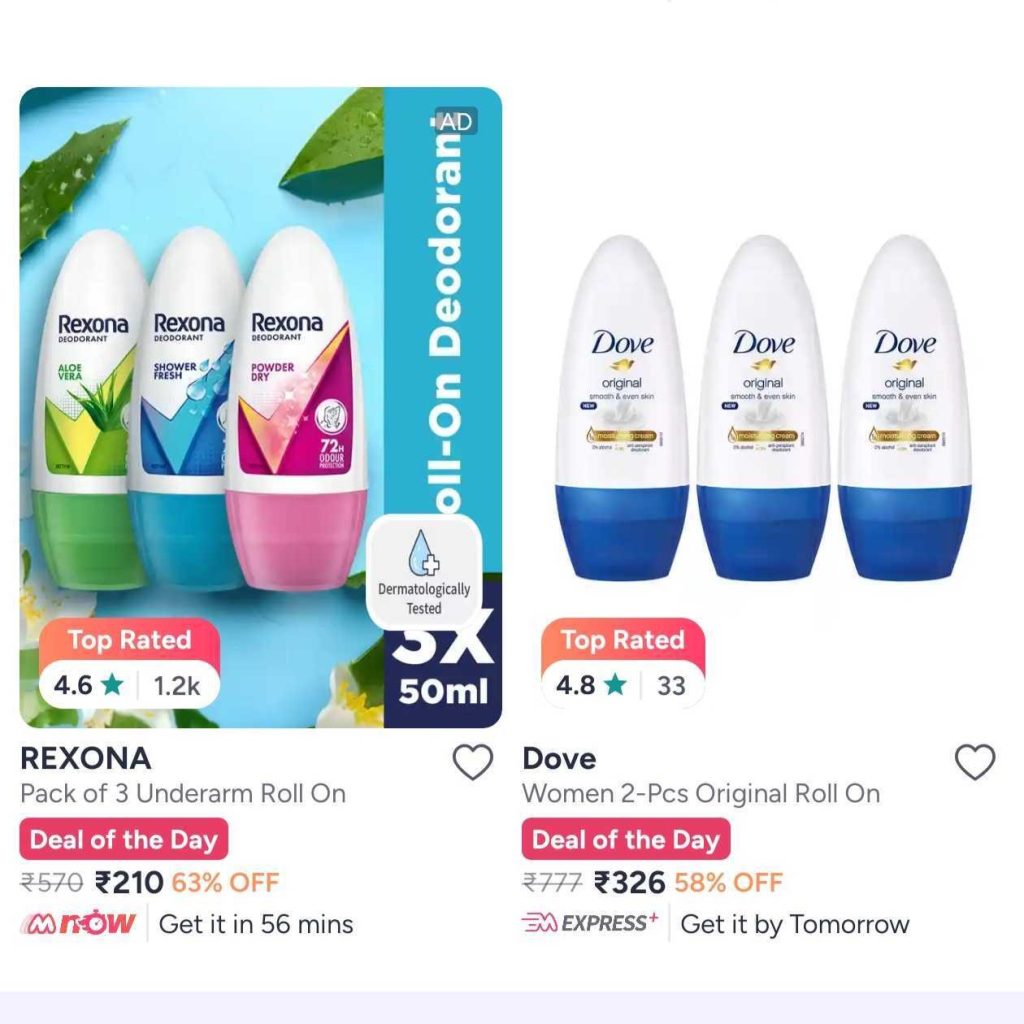
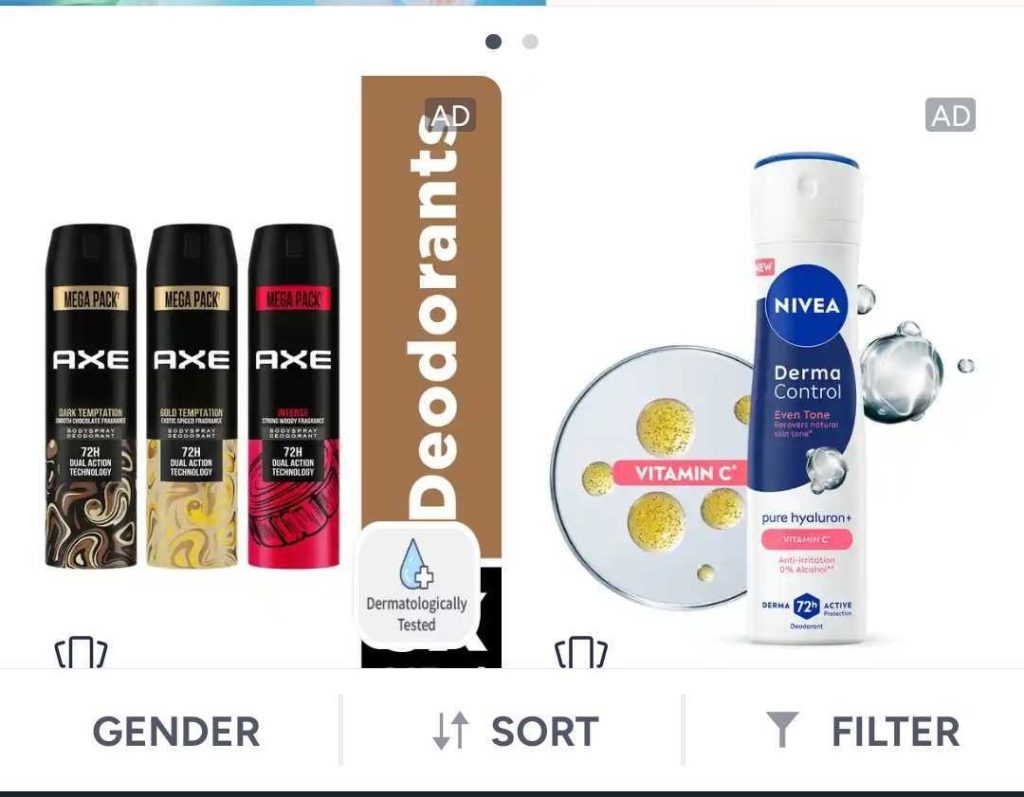
These are the ads that appear within search results and category listings, often indistinguishable from organic products except for their placement advantage. They are deeply integrated into the shopping experience, which is why they consistently drive the highest share of performance-led revenue.
What makes PLAs especially important is their accessibility.
They operate on a self-serve model through the Myntra Ads portal, allowing brands to directly control:
- Campaign creation
- Product selection (Style IDs)
- CPC and budget allocation
This makes them the foundation of most Myntra Ads strategies, particularly for brands focused on scale and performance.
- Product Contextual Ads
Alongside PLAs are Product Contextual Ads (PCA Ads).

Unlike PLAs, which blend into listings, PCA Ads are designed to appear in contextual placements, such as product detail pages, where users are already evaluating a specific item.
Their role is more subtle but equally powerful, to influence consideration and enable cross-sell or substitution at the point of decision.
However, PCA Ads are not self-serve.
They are managed in-house by Myntra, typically requiring coordination with the platform’s internal teams. This makes them less flexible, but often more curated in terms of placement and impact.
- Display Ads
The third layer is Display Advertising.


These are the most visible formats on the platform; homepage banners, event-led creatives, and high-impact visual placements.
They are designed not to blend in, but to stand out.
Display ads play a critical role during:
- Major sale events
- New collection launches
- Brand-building initiatives
Similar to PCA Ads, Display campaigns are also executed in-house by Myntra, giving brands access to premium real estate but with less direct control compared to PLAs.
What emerges from this structure is a clear divide.
PLAs offer control and scalability through self-serve execution, while PCA and Display formats offer premium visibility through managed placements.
But formats alone don’t define performance.
How these ads are targeted and more importantly, how they are structured within campaigns , determines how efficiently they deliver results.
Within PLA campaigns in particular, targeting operates at the ad group level, and this is where brands begin to make strategic decisions.
While formats define where your ads appear, targeting determines how they are delivered.
And within PLA campaigns, this becomes one of the most important levers in Myntra campaign management.
Setting Up a Campaign: Step-by-Step
Every PLA campaign on Myntra follows the same structural hierarchy: Campaign > Ad Group > Products. Getting the setup right at each level is what determines whether your campaigns optimise efficiently or stall.
Step 1: Ad Group Setup – Targeting Type
Targeting is configured at the ad group level. Myntra currently offers three targeting approaches:
- No Targeting (Auto / Default)
The system automatically places your ads across high-impact surfaces based on the product’s article type. A T-shirt style will appear for T-shirt searches, as determined by Myntra’s algorithm.
- How it works: Best for: Scale, automation, and performance-optimised delivery
- Reaches Search, PDP, and Homepage placements simultaneously
- Ideal for new campaigns or brands that want to test performance without complex setup
- Keyword Targeting
Ads are triggered when a shopper’s search term matches your targeted keywords, provided the product you are advertising is relevant to that search.
- You can add a minimum of 5 and a maximum of 200 keywords per ad group
- Both Exact Match and Phrase Match can be used within the same ad group
- The same keyword cannot have two different match types in the same ad group
- Up to 50 negative keywords can be added (Exact Match only)
- Bids are set at the ad group level and apply to all keywords in that group
- Separate bids can be set for Top of Search and Rest of Search placements
- Brand Protection
Restricts competitor ads from showing on your branded keyword searches. Ads appear when a shopper searches specifically for your brand, often combined with a category term (e.g., Brand + Dresses).
- Appears on Top of Search and Rest of Search for branded queries
- Best for: Defending brand visibility and improving CPC efficiency for branded searches
- Particularly important in competitive categories where rivals bid on your brand name
Step 2: Ad Group Setup — Product Selection
After choosing your targeting type, the next step is selecting which products (Style IDs) to include in your ad group.
| Method | Details |
| Manual Selection | Use filters to search and add individual Style IDs one by one. |
| CSV Upload (Recommended for bulk) | Download the template, fill in Style IDs, and upload. Best for adding 20+ styles at once. |
| Troubleshooting: Style Not Uploading?If a style ID fails to upload, it is likely due to one of three reasons: • The product is Out of Stock • The style is not currently live on the platform • The style is not mapped to your seller account Best Practice: Add 20-40 styles per ad group for better coverage and optimisation signals. |
Step 3: Ad Group Setup — Budget & CPC
Budget and CPC are configured at the ad group level. Getting these settings right is one of the most impactful decisions in your campaign setup.
Ad Group Budget
Allocate a portion of your total campaign budget to each ad group. Multiple ad groups within a campaign share the overall campaign budget envelope.
Budget Pacing
- Fast Burn: Spends budget quickly. Ideal for flash sales, short sale windows, or event-driven campaigns where maximising visibility in a compressed timeframe matters.
- Daily Limit: Sets a daily spend cap for controlled, sustained delivery across a longer campaign period.
Setting Your CPC
| Important: Myntra Uses a Fixed CPC Model, Not an AuctionUnlike Google or Amazon Ads where CPC fluctuates based on competing bids, Myntra operates on a fixed CPC model.This means you set the price per click and it stays constant. The minimum CPC is determined by article type. Refer to the Myntra Benchmark Sheet for category-specific minimum CPCs.CPC is defined at the ad group level, so all products within an ad group share the same base bid. Separate CPCs can be set per placement (Top of Search, Rest of Search, Home, PDP). |
Keyword Targeting: A Deep Dive
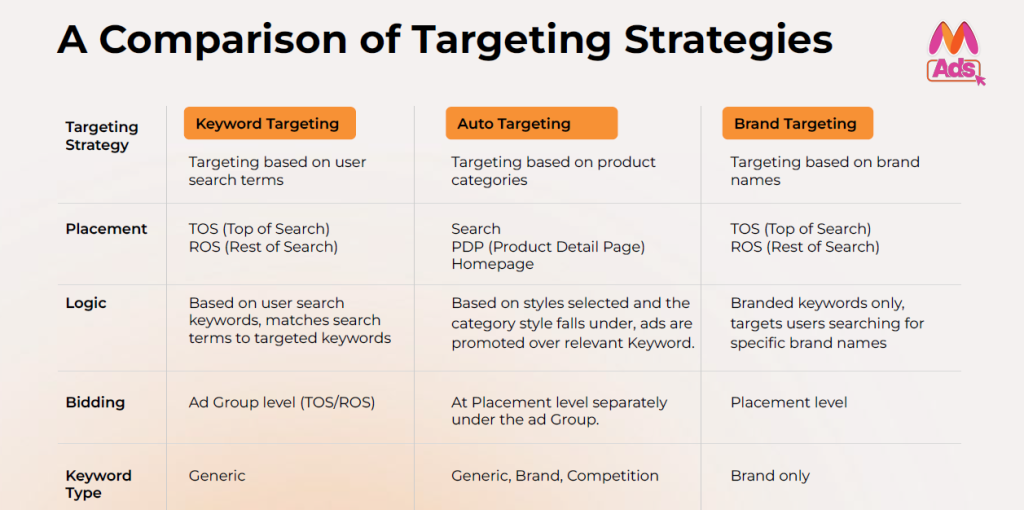
Source: Keyword targeting, Myntra Ads Portal
How Keyword Targeting Works?
Ads are triggered when a shopper’s search term matches a keyword you have targeted, and the product you are advertising is relevant to that search. Both conditions must be true for your ad to serve.
For example, if you target “shoes for men,” your ad can appear for search terms like “mens shoes” or “shoes for men”, provided your brand is promoting a relevant shoe style ID and the match type allows for it.
The Two Match Types
- Exact Match
Ads trigger only when the user’s search query matches your keyword exactly, or with minor variations such as:
- Plural forms (e.g., watch → watches)
- Case differences (e.g., Wallet → wallet)
- Filler words (e.g., shoes men → shoes for men)
- Spelling errors (e.g., Shoes → shus)
Benefit: Maximum precision and tight control over spend. Use Exact Match when you want to capture only the most relevant, high-intent queries.
- Phrase Match
Ads show when your keyword phrase appears within the user’s broader search query. Offers wider coverage while keeping relevance intact, including:
- Subqueries (e.g., running shoes → men running shoes)
- Reordered words (e.g., blue jeans → jeans blue)
- Synonyms (e.g., mobile → phone)
Benefit: Expanded reach while maintaining targeting accuracy. Use Phrase Match when you want to capture related search variations without manually adding every permutation.
The 5 Key Features of Keyword Targeting
| Feature | What It Means for You |
| Controlled Spends | Avoid wasted budget on irrelevant search terms by targeting only what matters. |
| Match Type Flexibility | Use Exact for precision targeting, Phrase for broader reach. |
| Search Term Report | See exactly which search terms are triggering your ads and driving traffic. |
| Keyword Negation | Add up to 50 negative keywords (Exact Match only) to exclude poor-performing terms. |
| Keyword Insights | Access 30-day impression data per keyword to make data-driven decisions. |
How to Add Keywords: 3 Upload Methods
1. Suggested Keywords
Myntra surfaces keyword suggestions tailored to your selected Style IDs, with impression volume from the last 30 days. Data updates daily. New products may show zero impression values initially, as impressions are calculated based on the selected Style ID.
- Up to 200 suggestions available per session
- Best for: Discovering high-volume terms you may have missed
2. Manual Entry
Type specific keywords directly, separated by commas. Must follow match type rules. Cannot include keywords already added to targeting.
- Best for: Adding highly specific terms you know will perform
3. Bulk Upload
Upload a keyword file to add multiple keywords at once. Supports both Exact and Phrase match types. Invalid or duplicate keywords are automatically skipped.
- Best for: Scaling keyword lists across multiple campaigns quickly
| Keyword Targeting Rules You Must Know• Only generic keywords can be added. Brand keywords and competitor keywords cannot be added and will not serve.• Keywords cannot be paused. You can only remove them.• You cannot negate a keyword that is already added as a targeting keyword. Remove it from the targeting list first.• Match type cannot be changed once a keyword is added.• The same keyword cannot be added in both Exact and Phrase Match within the same ad group. Use separate ad groups for different match types. |
The 7 Placement Zones Explained
| Placement | Intent Level | Description |
| Top of Search (TOS) | Highest | First 10 search results. Most competitive and conversion-driven placement on the platform. |
| Rest of Search (ROS) | High | Below top search slots. Captures search-driven intent at scale with significant volume. |
| Top of Home | Medium | Homepage feed. Products shown based on past browsing and search behaviour. View-based remarketing. |
| Rest of Home | Medium | Lower homepage feed. Reinforces recall across sessions for users who have browsed but not yet purchased. |
| Top of PDP | Very High | Prominent placement on product detail pages. Surfaces similar or contextually relevant items to users at peak consideration. |
| Rest of PDP | High | Lower PDP. Highlights comparable products and alternatives while user is still evaluating. |
| PDP Cross-Sell | Specialised | Below the review section on PDP. Exclusively for Beauty & Personal Care brands to cross-sell across categories. |
| Placement Strategy: Where to Bid AggressivelyNot all placements deserve the same CPC. Prioritise them based on where user intent is strongest: • Bid highest on Top of Search: This is where active purchase intent is at its peak. • Use Rest of Search for volume: High traffic at a lower cost per click. • Use PDP placements for comparison-stage influence and cross-sell. • Use Home placements for remarketing and rediscovery at lower CPCs.You can set custom CPCs per placement within each ad group on the Myntra Ads portal. |
Understanding Campaign Statuses
Every campaign and ad group on Myntra displays a status. Knowing what each status means helps you act quickly and avoid unnecessary spend pauses.
| Status | What It Means |
| Scheduled | Set for a future start date. Edits are allowed. |
| Processing | Temporary system state while Myntra processes your campaign. No edits allowed. |
| Live | Actively serving ads. Your campaigns are running. |
| Paused | Manually paused by the user. Ads are not serving. |
| Daily Budget Met | Automatically paused for the day because the daily spend cap has been reached. Will resume the next day. |
| Budget Met | Total ad group or campaign budget is exhausted. Campaign will not resume without adding more budget. |
| On Hold | All ad groups within the campaign are paused, expired, or aborted. |
Editing Live Campaigns
One of the most valuable features of the Myntra Ads portal is the ability to make real-time adjustments to campaigns that are actively serving. This lets you adapt strategy based on performance without starting from scratch.
| ✔ What You CAN Edit | ✖ What You CANNOT Edit |
| • Increase campaign budget• Adjust CPCs (raise or lower bids)• Extend the campaign end date• Add or remove products (Style IDs) | • Reduce budget or shorten duration• Change the RO/PO once live• Switch targeting type (e.g., Auto to Brand Protection) |
What Actually Drives Performance on Myntra Ads (And How to Measure It) ?
At a glance, Myntra Ads performance is often reduced to a single metric, ROI.
But outcomes are shaped much earlier in the journey.
Every campaign on Myntra follows a simple chain:
Visibility → Click → Conversion
Visibility is the starting point. It’s influenced by factors like CPC, placement, and category competitiveness. But visibility alone doesn’t drive results, it only creates the opportunity to be considered.
What follows is driven by click behaviour.
On Myntra, this is largely visual. Strong imagery, clear styling, and visible value (like discounts) determine whether a user engages or scrolls past.
Conversion, however, depends on a different set of signals.
At this stage, users evaluate:
- Price competitiveness
- Ratings and reviews
- Size availability
- Overall product trust
Even high-performing ads will struggle if these fundamentals don’t align.
This is what makes Myntra Ads distinct.
It doesn’t operate as an isolated performance lever, it amplifies the strengths and weaknesses of your catalog.
To understand this impact more clearly, it’s important to look beyond surface-level metrics.
- At the top, impressions indicate how often your products are being shown — a reflection of visibility.
- CTR (Click-Through Rate) reveals how compelling your product is within that visibility.
- From there, direct sales measure conversions from the exact product that was clicked.
- But one of the most important and often overlooked metrics is indirect sales.
These represent purchases of other products from your brand after a user interacts with your ad. They highlight the halo effect, where ads drive discovery beyond a single SKU.
When combined, these metrics provide a more complete picture of performance.
Because on Myntra, success isn’t just about what gets clicked, it’s about what ultimately gets sold, even if the journey isn’t linear.
Who Should (and Should Not) Invest in Myntra Ads?
Myntra Ads can be a powerful growth lever, but it does not work equally well for every brand. Its effectiveness depends less on the platform and more on how prepared your brand is.
Brands That Tend to Perform Well
- Fast-fashion labels and high-SKU brands with a wide, frequently refreshed assortment
- D2C brands scaling their presence and looking to acquire new customers at scale
- Brands with strong visual merchandising and compelling product imagery
- Brands with competitive pricing that can convert once traffic arrives
- Brands with enough margin flexibility to sustain CPC costs while maintaining profitability
Brands That Often Struggle
- Brands with limited assortment or inconsistent inventory (key sizes unavailable, frequent out-of-stock)
- Brands with pricing that does not align with market expectations in their category
- Brands with weak product photography or imagery that does not stand out in a visual-first platform
- Brands that expect ads to fix underlying catalog or product quality issues
| The Fundamental Rule of Myntra Ads: Myntra Ads works best when the fundamentals are already in place.The platform does not create demand in isolation. It amplifies what is already working, and exposes what is not.Before scaling spend, ensure your catalog quality, imagery, pricing, and inventory depth are ready to convert the traffic your ads will generate. |
Key Platform Features: Why Myntra Ads
Beyond campaign basics, the Myntra Ads portal has evolved significantly. Here are the platform-level features that give brands a meaningful edge:
| Feature | What It Enables |
| Faster RO Approvals | Rejection reasons are surfaced directly on the portal, reducing back-and-forth and delays. |
| Enhanced Reporting | 3-month data view available with faster downloads for more robust performance analysis. |
| Daily Spend Control | Set daily caps at the ad group level for controlled, sustained delivery. |
| Placement-Level Insights | See performance by placement zone, enabling smarter CPC decisions. |
| Auto PO Sync | Campaigns automatically reference active Purchase Orders, reducing manual overhead. |
| Editable Live Campaigns | Make real-time budget, CPC, and product adjustments without stopping the campaign. |
The Myntra Ads Playbook: Do’s and Don’ts
Effective Myntra campaign management is not about doing more. It is about getting the fundamentals right and repeating them consistently.
| ✔ DO These Things | ✖ DON’T Do These Things |
| ✔ Use high-performing bestseller Style IDs as your campaign anchor✔ Create separate campaigns for different article types (Shirts vs. Jeans)✔ Monitor placement reports and shift budget to top-performing zones✔ Include 20-40 styles per ad group for better coverage and signals✔ A/B test different CPCs and budgets to find your sweet spot✔ Upload POs for longer durations (e.g., 3 months) to avoid campaign pauses✔ Use Auto + Keyword Targeting in combination for balance of scale and precision✔ Monitor indirect sales to discover halo effects and high-interest products | ✖ Run campaigns with very few styles or mixed article types in one ad group✖ Run campaigns for very short durations (less than 3 days)✖ Set and forget. Continuously monitor and optimise performance✖ Treat PLA like a creative-led format. Performance is driven by product quality and targeting✖ Set unrealistically high CPCs. It is a fixed-price model, not an auction✖ Run campaigns for products that are out of stock or not yet live✖ Add competitor or brand keywords in keyword targeting (they will not serve)✖ Ignore indirect sales or discovery-layer performance data |
Appendix: Key Terms Glossary
Myntra Ads comes with its own terminology. Here is a quick reference for every term you will encounter:
| Term | Definition |
| PLA | Product Listing Ads. The primary self-serve ad format on Myntra. |
| RO | Release Order. Your budget commitment to the platform. |
| PO | Purchase Order. The internal document created from an RO. |
| CPC | Cost Per Click. The amount you pay each time a user clicks your ad. |
| ROI | Return on Investment. Total Revenue divided by Ad Spend. |
| TOS | Top of Search. The premium first slots in search results. |
| ROS | Rest of Search. Search placements below the top slots. |
| PDP | Product Detail Page. The individual product listing page. |
| CTR | Click-Through Rate. Clicks divided by Impressions. |
| Style ID | The unique identifier for each product variant on Myntra. |
| Article Type | The product category classification used by Myntra (e.g., T-Shirt, Jeans). Determines floor CPC. |
| FCC | Flipkart Commerce Cloud. The legacy portal (predecessor to the current Myntra Ads portal). |
| Attribution Window | The 30-day window in which purchases after an ad click are attributed to that campaign. |
Scaling Myntra Ads with the Right Partner
As straightforward as Myntra Ads may seem on the surface, managing it effectively at scale is far more nuanced.
Because success doesn’t come from isolated actions, it comes from connecting structure, data, and continuous optimisation into a single system.
This is where most brands face challenges.
Campaigns are often set up correctly but not evolved. Data is available but not fully utilised.
And opportunities, whether in placements, keyword refinement, or SKU prioritisation, remain underleveraged.
At Paxcom, the focus has been on solving exactly this. With deep expertise in Myntra campaign management, the approach goes beyond execution into building a performance framework tailored to each brand.
This includes:
- Structuring campaigns for scalability
- Continuously optimising targeting and placements
- Leveraging search term and catalog data for smarter decisions
- Aligning ad strategy with broader business goals
The result isn’t just improved ROI in isolation.
It’s a more predictable, scalable growth engine on Myntra.
As the platform continues to evolve into a discovery-first ecosystem, brands that treat advertising as a structured capability, not a one-off activity, will be the ones that stay ahead.
Conclusion
Myntra today operates at the intersection of discovery, content, and commerce, where visibility is no longer guaranteed, but strategically earned.
In this environment, Myntra Ads becomes foundational, not optional. Not just for driving sales, but for ensuring that your brand shows up at the right moments whether users are browsing, searching, or deciding.
The brands that succeed aren’t necessarily the ones spending the most. They’re the ones that understand how the system works, structure their campaigns thoughtfully, and continuously refine their approach.
Because on a platform built around discovery,
it’s not just about being present, it’s about being placed where it matters most.